We Are Cooking: Taste of Life
- 4.7
- Rating
- 5.00M
- Installs
- Free
- Price

 Analysis by App-foxy
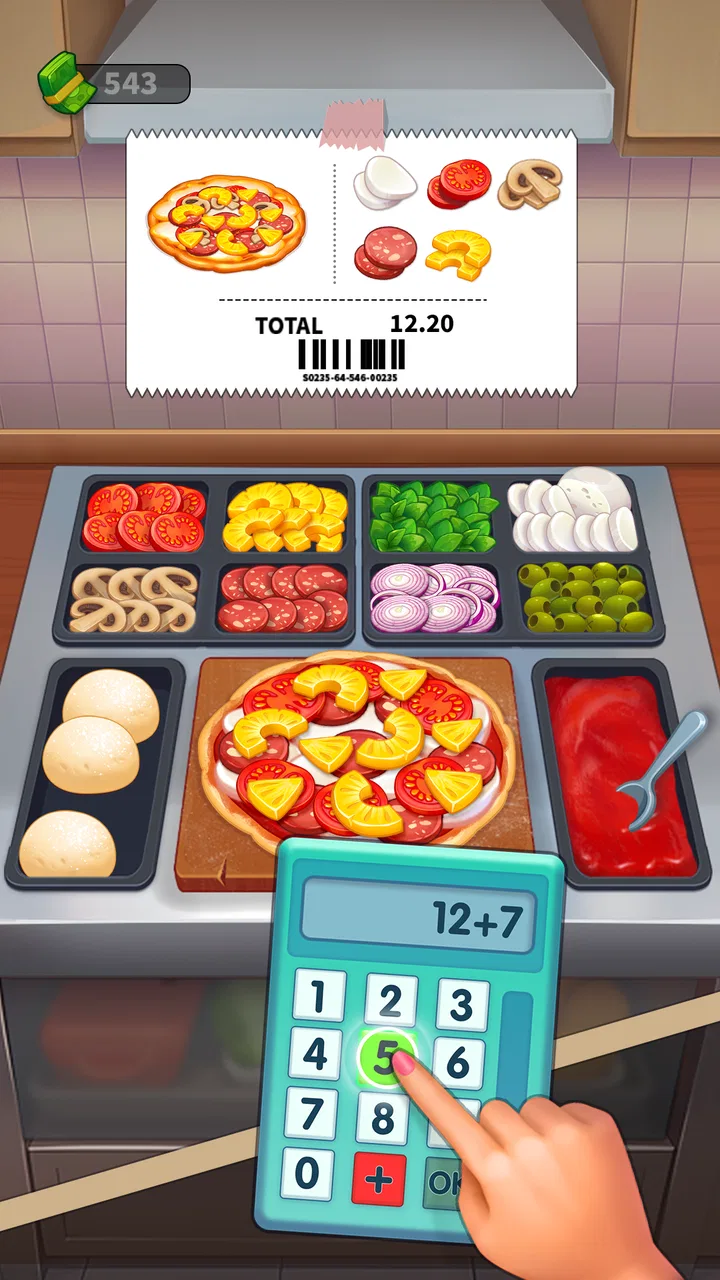
I like cooking games most when they understand that not every play session is a long one. Sometimes I have only a few spare minutes while waiting for a bus, taking a break, or letting dinner finish in the real kitchen. We Are Cooking: Taste of Life is built for that kind of moment: a free arcade game from Matryoshka where the basic pleasure comes from preparing food and keeping a restaurant moving. It is easy to start, quick to understand, and cheerful enough to make a short break feel more active than simply scrolling.
My first impression was that it aims for immediate engagement rather than a complicated simulation. You are not being asked to study a professional kitchen or manage a detailed business spreadsheet before having fun. The appeal is the flow of serving, reacting, and trying to stay ahead. That makes it approachable, but it also means the game’s long-term value depends heavily on how much you enjoy repeating a familiar rhythm with gradually increasing pressure.
How the cooking loop feels in a short session
The strongest part of the experience is the moment-to-moment clarity. A customer wants something, food needs attention, and the next action is usually obvious. That directness matters on a phone because small-screen games can become tiring when they bury the important information under menus. Here, the cooking theme gives every task a readable purpose: prepare the order, avoid letting the flow break, and keep the restaurant functioning.
You May Also Like

 Pandora - Music & Podcasts
Pandora’s Music Is Easy to Start, but Harder to Recover
Pandora’s strength is its low-effort path from a seed to a station. Its weak spot is how much confidence it asks you to place in connection, setup, and quiet recovery.

 8 Ball Pool
 Is Built on Rivalries, Rematches, and Routine
A close look at the rivalries, rematches, shared routines, and unanswered safety questions that turn a quick pool match into a persistent mobile community.

 Samsung Music
’s Quiet Strength Is Playing What You Already Own
Its reach comes less from spectacle than from dependable access to a personal library. That simplicity is both the app’s strongest retention engine and its ceiling.

 AccuWeather: Weather Radar
AccuWeather Review: A Quick, Clear Forecast for Everyday Decisions
For everyday plans, the best forecast is the one you can understand quickly. AccuWeather makes rain timing, radar, and local conditions easy to act on, with a few trade-offs.

 Hill Climb Racing
Why Hill Climb Racing Still Turns Crashes Into One More Run
A tiny car, a bumpy hill and one more upgrade: Hill Climb Racing keeps resurfacing because its simple chaos makes every near-miss feel personal.

 AliExpress - Shopping App
AliExpress Makes Global Shopping Feel Personal, but Shoppers Bear the Risk
AliExpress turns a global marketplace into a pocket-sized discovery engine. Its reach is useful, its shopping loop compelling, and its trade-offs easy to miss.
More From Our News Desk
View All News


I found that a short session can feel complete even when I do not have time to settle in. The game does not require the same commitment as a large strategy title or a story-heavy role-playing game. I can open it, handle a handful of restaurant challenges, and leave with the sense that I actually played something rather than merely collected a daily reward. That is a meaningful strength for commuters, students between classes, or anyone who prefers games that respect small gaps in the day.
The arcade classification is a good fit. Although the restaurant setting gives the game personality, the main satisfaction comes from timing and quick decisions rather than from building a deeply realistic culinary career. I would not install it expecting a full restaurant-management simulator. I would install it because serving food under pressure is a simple framework for short, active rounds.
There is also a useful distinction between understanding the controls and mastering the pace. The first part is friendly: the food-and-restaurant context makes the objectives feel natural. The second part takes more attention. Once several demands compete for your focus, careless taps or poor ordering can make the whole kitchen feel less efficient. My practical advice is to scan the complete situation before acting whenever the game gives you a moment. Rushing every action is not always faster; a clean sequence can prevent a small mistake from becoming a chain of delays.
That habit becomes especially valuable when playing with one hand. On a phone, I prefer keeping my thumb near the area where the next likely action appears instead of moving randomly across the screen. I also try not to begin an order simply because it is visible. I first check whether another task is already close to completion. This is a small change, but it makes the restaurant feel more controlled and reduces the frantic tapping that can make cooking games feel like work.
A welcoming arcade game, not a culinary simulator
The game’s food theme is inviting, but its real subject is pressure management. You are not learning recipes in a practical sense, and I would not use it as a substitute for a cooking app or a serious business game. Its value is emotional and mechanical: it turns familiar restaurant problems into compact challenges that are easy to replay.
That makes it a better match for players who enjoy visible progress through repeated actions. If you like arranging tasks, reacting to customers, and improving your timing, the format is satisfying. If you want open-ended creativity, detailed decoration, or the freedom to experiment with food without pressure, the arcade structure may feel narrow.
The game is free, which lowers the barrier to trying it. It is also suitable for Everyone, so it is a reasonable choice for a broad family audience. The current version is 0.11.1.6, and the stated minimum operating-system requirement is Android 7.0. Those details make it fairly approachable for people who are not using a brand-new phone, though actual comfort will still depend on the device’s screen, responsiveness, and available space.
Its popularity gives a useful signal without replacing personal taste. The game has a 4.7 average from around 29 thousand ratings, with more than a thousand reviews and over a million installs. I read that as evidence that the core loop connects with a large casual audience. It does not guarantee that every player will enjoy the repetition, but it does suggest that the basic cooking-and-serving formula is easy for many people to pick up.
Why the session rhythm matters more than the theme
What kept me returning was not the idea of becoming a restaurant owner by itself. It was the compact rhythm of seeing a problem, making a choice, and immediately seeing whether that choice worked. This is the kind of feedback that makes a game useful during a short pause. There is little need to remember a complicated plot or reconstruct a large plan after being away for several hours.
For an everyday example, imagine opening the game during a ten-minute coffee break. I would rather play a round that gives me a clear beginning and end than start a game that punishes me for leaving halfway through a long mission. We Are Cooking: Taste of Life fits the former use case better. I can focus on the restaurant for a while, put the phone down, and return later without feeling that I have abandoned a major strategic operation.
That convenience has a trade-off. Short, understandable rounds can become predictable more quickly than a game with a large world or a constantly changing set of rules. The pleasure comes from improving execution inside a familiar framework, not from discovering an entirely new activity every time. Players who need constant novelty may find the cooking routine less compelling after the initial attraction fades.
Returning after interruptions
Interruption tolerance is one of the most important qualities in a mobile game, and this is where I think the title makes a sensible casual choice. Its basic actions are easy to recall. When I return after checking a message or dealing with something at home, I do not need a long explanation of the game’s entire structure. The restaurant context brings me back quickly: look at what needs attention, choose the next useful action, and continue.
I still prefer to start a fresh session when I know I may be interrupted again. Cooking games are naturally sensitive to broken concentration, because a few seconds of distraction can affect the order in which tasks are handled. If you are playing while walking, crossing a street, or doing anything that requires your full attention, this is not the right kind of game to use. It is casual in commitment, but the active moments still deserve focus.
One practical routine helped me. Before leaving a session, I try to finish the immediate action rather than closing the game in the middle of a busy sequence. That gives me a cleaner mental restart. When I return, I can approach the next challenge without wondering which task was already in progress. This is not a flashy feature; it is simply a better way to use a game whose enjoyment depends on keeping several small responsibilities organized.
The same principle applies to battery and attention. I would choose it for a short break, but I would not plan an entire evening around it unless I already knew that the repeated restaurant loop suited me. The game is at its best when it fills spare time, not when it is forced to carry a marathon session.
What happens when the novelty settles
Repetition is not automatically a weakness. In a good arcade game, repetition gives you room to become more efficient. I enjoy noticing that I am making fewer unnecessary moves or recovering more calmly when several demands arrive together. That kind of improvement is personal rather than dramatic, and it can be surprisingly satisfying.
However, the repetition here should be judged honestly. The food and restaurant presentation can make the first sessions feel fresh, but the underlying activity remains focused on serving and managing a busy kitchen. If you need a game to keep introducing radically different mechanics, this may not hold your attention for long. I would describe the replay value as skill-based and routine-based rather than discovery-based.
My best approach is to treat each session as a small performance challenge. Instead of asking whether the game will transform every time I open it, I ask whether I can handle the same kind of pressure with better timing and fewer wasted actions. That mindset makes the repetition more rewarding. Without it, the loop can start feeling like a checklist.
It also helps to vary the circumstances in which you play. A quick session during a quiet break feels different from a session when you are already tired or distracted. I get more enjoyment when I play with enough attention to make decisions deliberately. If I am only tapping to fill time while watching another video, the restaurant loop loses much of its appeal because its main pleasure comes from responding to what is happening on screen.
Free entry, with a purchase decision worth considering
There is no upfront price, so trying the game is straightforward. The in-app purchase range runs from $0.99 to $199.99 per item, which is a wide span and something I would take seriously before spending. A free download can be convenient, but I recommend deciding on a personal spending limit before getting invested in progress. That is especially sensible in a game designed around repeated short sessions, because frequent returns can make optional purchases feel tempting over time.
I would not make a purchase simply because a difficult restaurant moment became frustrating. I would first ask whether the problem is genuinely blocking enjoyment or whether I can improve by changing my order of actions. In this type of game, better prioritization can sometimes solve a difficulty that initially feels like a need for extra help. Keeping that distinction clear protects the casual nature of the experience.
For parents, the Everyone age rating makes the game easier to consider for a mixed-age household, but the purchase settings still deserve attention. The content may be broadly accessible while optional spending remains a separate practical concern. I would review device-level purchase controls before handing the phone to a child, particularly because the game is free to begin and can encourage regular play.
Who will enjoy it, and who should skip it
I would recommend this game to someone who wants a friendly arcade experience with a clear food theme, quick decision-making, and sessions that can fit around real life. It is particularly suitable for players who enjoy gradually getting better at a repeated task. The combination of a free entry point, a broad age rating, and simple restaurant goals makes it easy to test without committing to a large download purchase or a complicated learning process.
I would be more cautious with players who dislike time pressure, repeated service tasks, or games that ask for constant attention during their active moments. It is also not my first choice for someone seeking a story, a relaxed decorating experience, or deep economic planning. In those cases, a slower restaurant builder or a puzzle game with turn-based decisions would probably be a better fit.
Compared with the usual alternatives in the cooking-game category, this one sits closer to the quick arcade side than to a detailed management experience. That is its identity and its limitation. A more elaborate alternative may offer broader customization and longer-term planning, while a simple puzzle alternative may be easier to play when interruptions are constant. I prefer We Are Cooking: Taste of Life when I want the satisfaction of keeping a busy food operation moving, but not when I want to design every part of a restaurant.
Another useful comparison is with endless casual games that depend almost entirely on reflexes. The restaurant setting gives this title more structure than pure tapping entertainment. You are not just reacting; you are deciding which demand deserves attention first. Still, it does not become a full strategy game. Its decisions remain compact and practical, which is exactly why it works well as a short-session option.
My everyday strategy for getting more from it
I found three habits especially useful. First, I avoid treating every visible order as equally urgent. I look for the task that is closest to completion or the one most likely to create a bottleneck, then act on that information. Second, I keep my movements deliberate instead of tapping rapidly without checking the whole kitchen. Third, I stop after a satisfying session rather than continuing until the routine feels stale. That last habit protects the game’s strongest quality: it is easy to enjoy in small portions.
These choices also reveal the game’s main trade-off. It rewards attention, but it does not necessarily reward long endurance. The longer I play without a clear goal, the more noticeable the repeated structure becomes. A short break gives the loop energy; an extended session can expose its limits. I would use it as one game among several, not as my only mobile entertainment.
For someone deciding whether to install it, my advice is simple: try it when you have a few uninterrupted minutes and judge the feel of the restaurant loop rather than the food theme alone. Ask yourself whether organizing several small actions is enjoyable. If the answer is yes, the game has a good chance of becoming a dependable time filler. If the answer is no, attractive dishes will not change the underlying style.
Final thoughts on the casual experience
We Are Cooking: Taste of Life succeeds because it gets to its central activity quickly. I can understand the restaurant challenge without studying a manual, enjoy a compact burst of play, and return later without reconstructing a complicated plan. For short-session clarity and immediate pleasure, that is a strong combination.
Its replay value is more modest but still real. The game is most satisfying when I am trying to improve my handling of familiar pressure, not when I am waiting for a completely different genre to appear inside the restaurant. Repetition will be enjoyable for players who like refinement and less appealing for those who need constant surprise.
Overall, I see it as a good casual arcade recommendation for food-game fans who want something active, accessible, and easy to fit around a busy day. Matryoshka has chosen a clear lane, and the game is at its best when it stays there. If you want a quick restaurant challenge rather than a full business simulator, this is worth trying for free. Just keep your expectations realistic, manage optional spending carefully, and give each short session enough attention to appreciate the small decisions that make the kitchen work.
FAQs for We Are Cooking: Taste of Life
01What is the main objective of We Are Cooking: Taste of Life?
We Are Cooking: Taste of Life is a culinary adventure game where players manage a virtual kitchen, create diverse recipes, and serve dishes to customers. The main objective is to successfully complete cooking challenges, unlock new ingredients, and expand your restaurant, all while ensuring customer satisfaction and maintaining a high service quality.
02Is We Are Cooking: Taste of Life suitable for all age groups?
Yes, We Are Cooking: Taste of Life is designed to be family-friendly and suitable for all age groups. The game features intuitive controls and colorful graphics that appeal to both children and adults, making it a fun and engaging experience for players of all ages who enjoy cooking and restaurant management games.
03Does We Are Cooking: Taste of Life require an internet connection to play?
We Are Cooking: Taste of Life can be played both online and offline. While an internet connection is required for certain features like leaderboard updates and in-app purchases, the core gameplay experience can be enjoyed without an internet connection, allowing players to cook and manage their restaurant anytime, anywhere.
04Are there in-app purchases in We Are Cooking: Taste of Life?
Yes, We Are Cooking: Taste of Life offers in-app purchases that allow players to buy additional items such as premium ingredients, special kitchen tools, or decorative items to enhance their restaurant. However, these purchases are optional, and players can still progress through the game without spending real money.
05What platforms is We Are Cooking: Taste of Life available on?
We Are Cooking: Taste of Life is available on both Android and iOS platforms. Players can download the game from the Google Play Store for Android devices and the Apple App Store for iOS devices, ensuring a wide accessibility for mobile users wanting to enjoy this culinary experience.
Pros
- Engaging and colorful graphics.
- Wide variety of recipes to explore.
- User-friendly interface.
- Regular updates add new content.
- Encourages creativity in cooking.
Cons
- In-app purchases can be costly.
- Requires constant internet connection.
- Ads can be frequent and intrusive.
- Limited offline features.
- Some recipes are locked behind paywalls.

We Are Cooking: Taste of Life
Gallery